
"coffee cultivation elevation"
3000 article(s) found

Panamanian coffee taste, flavor, introduction, region
Panama is located at 9 degrees north latitude, at the confluence of the Central Mountain Range, where Mount Baru, one of the highest volcanoes in Central America, is located. With an elevation of more than 11,400 feet, the surrounding land is rich in nutrients and fertile soil, providing sufficient conditions for the planting and cultivation of Panamanian coffee. The appropriate microclimate, soil, temperature and altitude of these highlands

Important conditions for planting Coffee of Fine Coffee
There is a noun called coffee belt. There are more than 60 coffee producing countries in the world, most of which are located in the tropics and subtropics between the Tropic of Cancer (latitude 2326). This coffee growing area is called coffee belt (Coffee Belt) or coffee area (Coffee Zone). The annual average temperature of the coffee belt is above 20 ℃, because the coffee tree is a tropical plant, if the temperature is below 20 ℃.
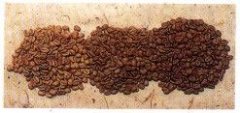
Coffee beans
Small and round dark brown coffee beans, quietly emitting a fragrant fragrance in the grinder, injected into the cup showing the beautiful color of amber, these are the three very deep impressions of coffee. As you explore the history and beauty of coffee, you can also see the coffee trees that are caressed by the tropical sun and whose leaves twinkle. It has small white flowers similar to jasmine.
Kinds of brand coffee and raw beans
At present, there are so many kinds of coffee beans imported from all over the world that there is no choice. Here, we will introduce the main producing areas and the characteristics of coffee beans as a reference for you to choose and buy coffee. * Brazil (South America) is the world's number one coffee producer and exporter. Because it is distributed all over the country, the quality is different, and it has its own standard (NO.2-NO according to the amount of dopants)

A brief introduction to the Origin, Development, History and Culture of Columbia's exquisite Coffee beans
The suitable climate in Colombia provides a real natural pasture for coffee. Coffee trees in Colombia are mainly cultivated in the Andes, on steep slopes about 1300 meters above sea level, where the annual temperature is about 18 degrees Celsius, annual rainfall is 2000 to 3000 millimeters, latitude 1-11 15 north, longitude 72-78 west, and the specific range of elevation can exceed 2.000 meters. By
The third producing area of Guatemala-different coffee networks at high and low elevations of traditional Attland coffee
Of the five volcanic coffee producing areas in Guatemala, Atitlan's soil is the most rich in organic matter. Guatemala has many volcanic lakes, of which Lake Attila is the largest and most famous; the mountains of majestic volcanoes extend into the shores of Lake Attila, and 90% of Atitlan coffee is grown on these majestic volcanic slopes.
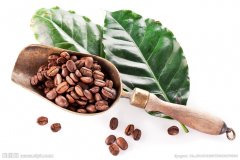
The third producing area of Guatemala-different coffee networks at high and low elevations of traditional Attland coffee
Of the five volcanic coffee producing areas in Guatemala, Atitlan's soil is the most rich in organic matter. Guatemala has many volcanic lakes, of which Lake Attila is the largest and most famous; the mountains of majestic volcanoes extend into the shores of Lake Attila, and 90% of Atitlan coffee is grown on these majestic volcanic slopes.
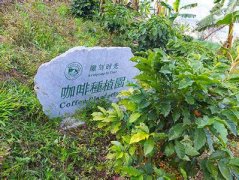
A brief introduction to the origin, development, history and culture of Columbia's exquisite boutique coffee beans.
The suitable climate in Colombia provides a real natural pasture for coffee. Coffee trees in Colombia are mainly cultivated in the Andes, on steep slopes about 1300 meters above sea level, where the annual temperature is about 18 degrees Celsius, annual rainfall is 2000 to 3000 millimeters, latitude 1-11 15 north, longitude 72-78 west, and the specific range of elevation can exceed 2.000 meters. By

Fruit flavor of Burundi coffee producing area Elevation characteristics Flavor price Variety taste grind Introduction
Country of manufacture: Burundi Grade: AA, FWS Region of cultivation: Buyendi Brand: Buyendi Method of treatment: Wet treatment Appearance: 1d/300gr, 16-18SCR Variety: Jackson Bourbon coffee has a strong taste, so you can't drink three or four cups in a row like tea or cola, but the official coffee cup is the best. Coffee is 80-100cc.

A brief introduction to the origin, development, history and culture of Columbia's exquisite boutique coffee beans.
The suitable climate in Colombia provides a real natural pasture for coffee. Coffee trees in Colombia are mainly cultivated in the Andes, on steep slopes about 1300 meters above sea level, where the annual temperature is about 18 degrees Celsius, annual rainfall is 2000 to 3000 millimeters, latitude 1-11 15 north, longitude 72-78 west, and the specific range of elevation can exceed 2.000 meters. By
Classification standard of coffee raw beans for fine coffee
There are two ways to classify raw coffee beans, one is the filter number, and the other is the elevation. It is divided by the number of the filter screen, and the size is in the unit of the screen (size). Round beans are generally smaller than flat beans, between 8-13 and 12-29. 8, 9, 10. 12, 13. 18. 29 = small, medium, ordinary. Quasi-big. Big, extra large. The bigger the size, the bigger the beans. Like SC.

Quality coffee beans, knowledge, classification of raw coffee beans
There are two ways to classify raw coffee beans, one is the filter number, and the other is the elevation. It is divided by the number of the filter screen, and the size is in the unit of the screen (size). Round beans are generally smaller than flat beans, between 8-13 and 12-29. 8, 9, 10. 12, 13. 18. 29 = small, medium, ordinary. Quasi-big. Big, extra large. The bigger the size, the bigger the beans. Like SC.

Panama Esmeralda Estate Coffee Production Introduction Esmeralda Estate Coffee Beans Elevation
Professional barista exchanges please pay attention to coffee workshop (Weixin Official Accounts cafe_style) Panamanian Esmeralda Manor coffee production area introduction Esmeralda Manor coffee beans elevation VOLCAN-CANDELA CANDELA Volcano This area produces most Panamanian food and some amazing coffee. Baru and Piedra Candel
Main origin and characteristics of coffee
The main producing areas and the characteristics of strict selection of beans at present, due to the wide variety of imported coffee beans from all over the world, it is impossible to choose. Here, we will introduce the main producing areas and the characteristics of coffee beans as a reference for you to choose and buy coffee. The main producing area of coffee and the characteristics of strict selection of beans * Brazil (South America) is the world's number one coffee producer and exporter. Due to its distribution in all parts of the country

The cultivation and background introduction of coffee in Uganda
Uganda is a landlocked country in eastern Africa, straddling the equator, bordering Kenya to the east, Tanzania and Rwanda to the south, the Democratic Republic of the Congo to the west and Sudan to the north. Most of the territory is located in the Central African Plateau, lakes, with an average elevation of 1000-1200 meters. There are many lakes and plateaus in the mountains, which are known as plateau water villages. The western branch of the East African Rift Valley runs through the western border, with many rivers and lakes at the bottom of the valley. There is a Victoria in Uganda.

Coffee planting and cultivation techniques Arabica coffee how to plant coffee seeds and how to grow into trees
Professional coffee knowledge exchange more coffee bean information please follow the coffee workshop (Wechat official account cafe_style) A coffee tree bears fruit several times a year. Coffee tree is a kind of plant that is very sensitive to climate, sunshine, Rain Water and soil. when a coffee bean sprouts up and takes root in the soil, it will squeeze the bean out of the soil.

A brief introduction to the planting situation of Colombian boutique coffee beans with mild taste, geographical location, climate and altitude
At present, most of the Colombian manors adopt the mixed mode of 70% Kaddura and 30% Colombia, and the delicious Dibica has disappeared. The overall coffee variety configuration in Colombia is roughly 50% in Kaddura, 30% in Colombia and 20% in Tibica. With rich landforms, low latitudes and high elevations, Colombia has excellent conditions for the growth of boutique coffee. The Costa Rican coffee area lies between three and eight degrees north latitude, belonging to low latitude.

Flavor Description of Colombia Snow Peak Coffee Bean Features Elevation
Colombia Xuefeng Coffee Bean Flavor Description Characteristics Altitude To really understand the flavor changes and product differences of coffee beans is to understand the place of production and growers, different flavors of different estates, or different flavors of different hills in the same estate. The story behind each coffee bean is what Coffee Fragrance wants to know... which plot of land can be traced back to which estate the beans came from, or
High-quality coffee common sense brand coffee kinds of raw beans
At present, there are so many kinds of coffee beans imported from all over the world that there is no choice. Here, we will introduce the main producing areas and the characteristics of coffee beans as a reference for you to choose and buy coffee. * Brazil (South America) is the world's number one coffee producer and exporter. Because it is distributed all over the country, the quality is different, and it has its own standard (NO.2-NO according to the amount of dopants)
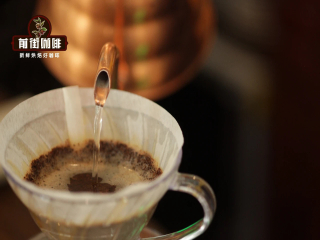
Does Costa Rican Tarazhu coffee taste good? how can Costa Rican coffee beans show sweetness?
Professional coffee knowledge exchange more coffee bean information please follow coffee workshop (Wechat official account cafe_style) Costa Rica is the most stable coffee in Central America, coffee production has a very long history, as early as the 19th century has been exported to the United Kingdom. In Costa Rica, Robes.